
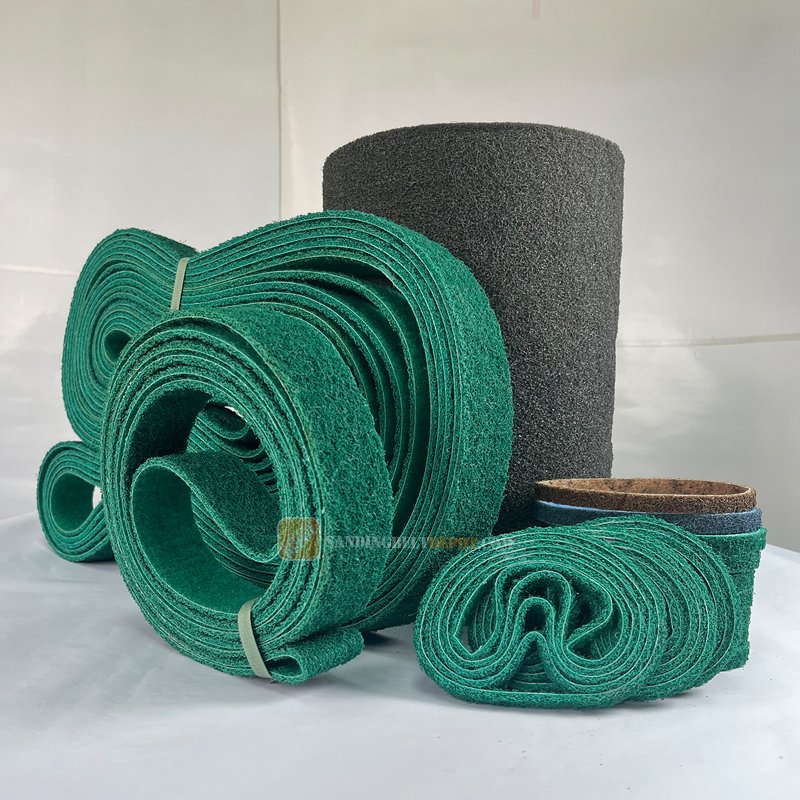
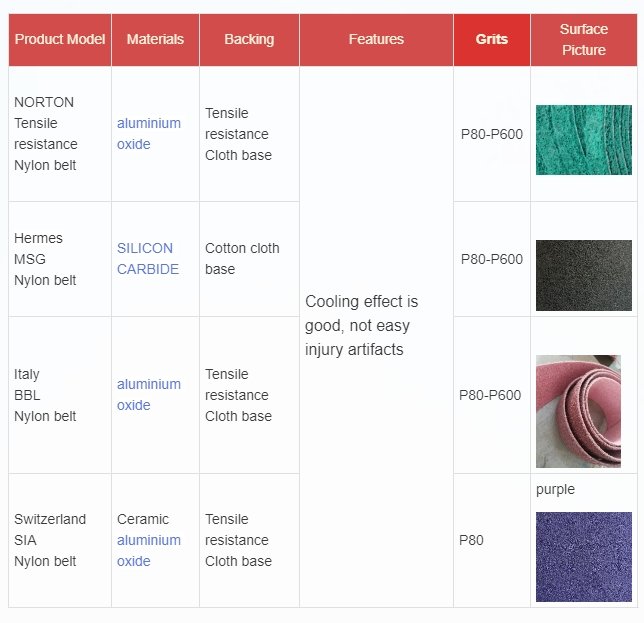
Nylon Sanding Belts, often referred to as non-woven abrasive belts, are a specialized type of finishing tool designed for surface conditioning, cleaning, and deburring. Unlike conventional coated abrasive belts that use a cloth or paper backing, nylon belts are constructed from a web of nylon fibers impregnated with abrasive minerals (such as aluminum oxide or silicon carbide), creating a durable, flexible, and consistent finishing solution.
This comprehensive guide will explain how they work, their key benefits, and their wide range of industrial applications.
How Do Nylon Sanding Belts Work?
The effectiveness of nylon sanding belts lies in their unique non-woven construction. Think of them less like sandpaper and more like a flexible, abrasive scouring pad in belt form.
- Structure: A loose web of nylon fibers is bonded together into a durable, open-weight fabric.
- Abrasive Impregnation: This nylon web is then impregnated with abrasive grains, which are securely held by a resin bond.
- Action: During use, the flexible fibers allow the abrasive grains to conform to irregular surfaces, providing a controlled, cutting-action finish that removes minimal material while effectively blending scratches, cleaning surfaces, and creating a uniform finish.
Key Advantages of Nylon Non-Woven Belts
Nylon belts offer distinct benefits that make them superior to traditional belts for specific finishing tasks:
| Feature | Benefit |
|---|---|
| ✅ Flexibility & Conformability | Easily adapts to curves, contours, and irregular shapes without “digging in” or creating grooves. |
| ✅ Consistent, Uniform Finish | Produces a predictable satin or brushed finish (e.g., #4 finish on stainless steel) ideal for aesthetics. |
| ✅ Cool Cutting Action | The open web structure reduces heat buildup, preventing warping or “bluing” of sensitive metals. |
| ✅ Durable & Long-Lasting | The nylon web structure is resilient and wears slowly, offering a longer service life than many cloth belts. |
| ✅ Non-Loading | The open structure helps prevent clogging (loading) with material, especially on softer metals like aluminum.
|
Primary Applications of Nylon Sanding Belts
Nylon belts are the go-to choice for a variety of surface preparation and finishing applications across numerous industries:
1. Metalworking & Fabrication
- Stainless Steel Finishing: Creating a uniform #4 satin finish or “brushed” look on appliances, kitchen equipment, and architectural elements.
- Weld Blending & Cleaning: Smoothing and blending weld seams without removing significant base metal.
- Deburring: Removing sharp burrs and edges from machined or stamped metal parts.
- Rust & Oxide Removal: Gently cleaning surface corrosion from steel and aluminum without aggressive scratching.
2. Woodworking
- Final Surface Conditioning: Providing a fine, consistent scratch pattern before applying stain or finish.
- Blending Repairs: Evening out repaired areas with the surrounding wood grain.
- Paint Preparation: Cleaning and lightly scuffing surfaces for better paint adhesion.
3. Automotive & Aerospace
- Paint Prep & Feathering: Blending repair areas and preparing surfaces for painting.
- Composite Finishing: Cleaning and finishing fiberglass and carbon fiber components.
4. General Maintenance & Repair (MRO)
- Surface Cleaning: Removing light corrosion, paint, or contamination from equipment.
- Restoration: Refinishing and cleaning tools, machinery, and other metal objects.
Nylon Belts vs. Conventional Coated Abrasive Belts
| Parameter | Nylon Non-Woven Belts | Conventional Coated Belts (e.g., Zirconia, Ceramic) |
|---|---|---|
| Primary Use | Finishing, Cleaning, Blending | Aggressive Stock Removal |
| Finish Quality | Uniform, consistent, low scratch pattern | Can leave deeper, more visible scratches |
| Flexibility | High – Conforms to contours | Low – Stiff, best for flat surfaces |
| Heat Generation | Low | High |
| Material Removal | Low and controlled | High |
Conclusion: Use nylon belts for finishing, and traditional belts for grinding.
Frequently Asked Questions (FAQ)
Q: What grits are nylon sanding belts available in?
A: They are graded differently from traditional belts, often as Coarse, Medium, Fine, and Very Fine. The equivalent grit range is approximately 60 to 400.
Q: Can I use nylon belts for heavy stock removal?
A: No. They are not designed for aggressive grinding. Attempting to remove a lot of material will quickly wear them out. Use them after initial grinding with a more aggressive belt.
Q: How long do they last?
A: Their lifespan is excellent for finishing work, often outlasting traditional finishing belts due to their durable nylon construction.
Q: Can they be used on aluminum?
A: Yes. They are excellent for aluminum as they resist loading (clogging) and provide a clean, scratch-free finish.
Ready to Improve Your Finishing Process?
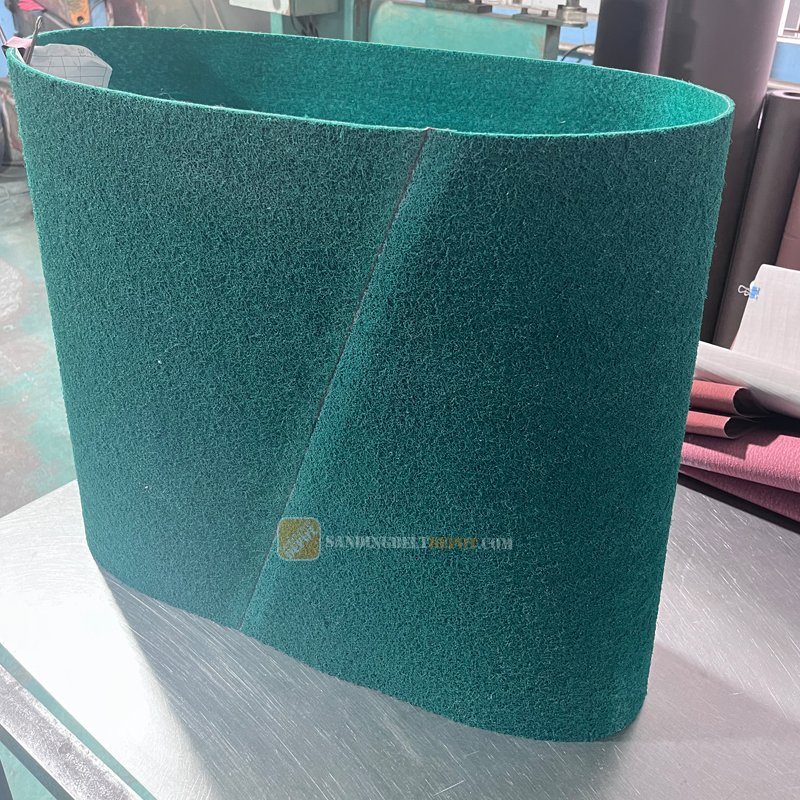
As a leading manufacturer, we provide high-quality nylon sanding belts in various sizes and grits. Our experts can help you select the perfect belt for your specific application.
👉 Contact us today for a free consultation and quote. Download our FREE Abrasive Selection Guide to master your surface finishing!
Contact us today for samples and bulk orders via WhatsApp (+86-18933421899) or visit our website: [sandingbeltdepot.com]