
In industrial manufacturing, wide sanding belts are key tools for achieving smooth, consistent surfaces on wood, metal, and composite materials. Yet, with dozens of abrasive types, backings, and grit sizes available, many buyers struggle to select the right belt for their application.
Choosing correctly can improve productivity by 30 %, reduce belt consumption by 20 %, and guarantee uniform surface results — vital for furniture factories, metal workshops, and precision finishing lines.
This guide explains how to select wide sanding belts step by step, based on grinding stages, materials, and performance goals.
Why Your Wide Belt Choice Matters
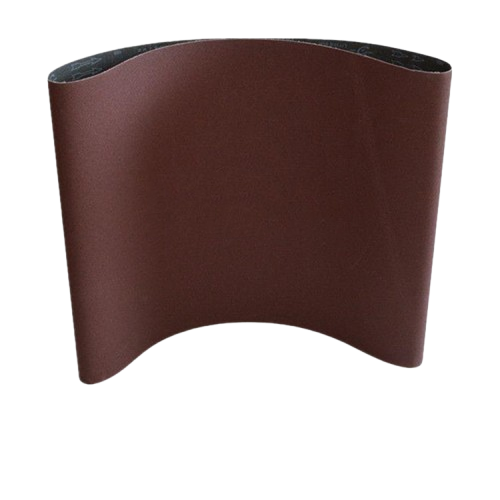
the best wide sanding belts
Selecting the right wide sanding belt is the most critical factor in optimizing your wide-belt sander’s performance. The wrong choice leads to excessive consumable costs, inconsistent finishes, and costly downtime. This definitive guide provides a data-driven framework to select the optimal abrasive belt for your specific material and production goal. By following our expert recommendations, manufacturers can achieve up to 50% longer belt life, a 30% reduction in operating costs, and a flawless, repeatable finish on large surfaces.
1. The Core Challenge: Pain Points in Wide Belt Sanding
Before choosing a belt, it’s essential to understand the common inefficiencies you’re likely solving for:
- ❌ High Abrasive Cost: Rapid belt wear on difficult materials like stainless steel or high-density composites shreds your budget.
- ❌ Inconsistent Finish: Belts that load, glaze, or break down create streaks, scratches, and an uneven surface, leading to rework.
- ❌ Burning & Defects: Excessive heat buildup from inadequate abrasives can burn wood veneers or anneal metal surfaces, ruining expensive workpieces.
- ❌ Frequent Changeover: Belts that don’t last require constant stopping and starting, killing production line efficiency.
Case in Point: A furniture panel manufacturer using a low-quality belt on their wide-belt sander faced constant burning on oak veneers and needed to change belts twice per shift. This resulted in a 15% loss in daily productivity and a 20% reject rate.
2. The Ultimate Solution: A Framework for Selection
The “ultimate” belt doesn’t exist—the best belt is the one perfectly matched to your Machine, Material, and Mission. Follow this decision framework.
2.1. Step 1: Identify Your Primary Material
Your material dictates the abrasive mineral required.
| Material | Recommended Abrasive | Key Benefit |
|---|---|---|
| Hardwoods, Softwoods, MDF | Aluminum Oxide (AO) | Cost-effective, good for stock removal and finish sanding. |
| Carbon Steel, Hardwood, Paint | Zirconia Alumina (ZrO₂) | 3-5x longer life than AO on steel. Self-sharpening for cooler cutting. |
| Stainless Steel, Alloys, Composites | Ceramic Alumina | Premium choice. Exceptional durability and heat resistance on the toughest materials. |
| Non-Ferrous Metals, Glass, Ceramics | Silicon Carbide (SiC) | Very sharp, hard grains ideal for low-tensile strength materials. |
2.2. Step 2: Select the Grit Sequence for Your Desired Finish
Wide belt sanding is a multi-step process. Never try to do everything with one belt.
- Planing/Stock Removal (Aggressive Cut):
- Grit Range: 36 – 80 Grit
- Goal: Remove material quickly. Use an open coat to prevent loading.
- Intermediate Sanding (Scratch Leveling):
- Grit Range: 100 – 150 Grit
- Goal: Remove scratches from the previous, coarser belt.
- Finish Sanding (Final Preparation):
- Grit Range: 180 – 220 Grit (or higher for wood)
- Goal: Create a uniform, smooth surface ready for sealing, painting, or polishing.
Pro Tip: A typical progression for sanding plain carbon steel to a uniform finish is ZrO₂ 80 Grit → ZrO₂ 120 Grit → AO 220 Grit.
2.3. Step 3: Understand Backing & Bond Types
- Backing Material: X-weight (Heavy) backings are standard for heavy-duty metal grinding. Y-weight (Medium) and J-weight (Light) are used for finer finishing on wood and metals, offering more flexibility.
- Coat Type: Open Coat (only 50-70% of backing covered) is essential for sanding soft materials like wood or soft metals to prevent clogging. Closed Coat (100% coverage) is for maximum aggression on hard materials.
- Bond: The resin that holds the grains. A strong bond is needed for high-pressure grinding; a weaker bond is used for finer finishing to avoid loading.
3. Application Spotlight: Industry-Specific Recommendations
- Metal Fabrication: For stainless steel, use a Ceramic belt sequence (e.g., 80 – 120 – 220) for maximum life and a burn-free finish.
- Woodworking & Furniture: For solid wood and veneers, a Zirconia or Specialty AO belt provides the best balance of cut rate and finish quality. A common sequence is 60-80-100-120.
- Composite & Plastic Grinding: Silicon Carbide or Ceramic belts are often used for their sharp cutting action and resistance to loading on these abrasive materials.
Data Point: A metal service center switched from zirconia to ceramic wide belts for grinding 304 stainless steel sheets. This change increased belt life by 400% and eliminated burn marks entirely, paying for the premium abrasive cost within two weeks.
4. How to Implement This Solution & See Results
Choosing the right belt is the first step. Here’s how to ensure success:
- Audit Your Process: What is your current belt? What are your pain points (cost, finish, speed)?
- Consult an Expert: Work with a technical sales engineer to match your sander’s model, horsepower, and your material to the perfect belt specification. We offer this for free.
- Test with a Sample: Run a controlled test with a recommended belt versus your current belt. Measure linear meters sanded, finish quality, and total time.
- Analyze Cost-Per-Part: The goal isn’t the cheapest belt price, but the lowest total operating cost. A more expensive belt that lasts twice as long is actually 50% cheaper.
5. Frequently Asked Questions (FAQ)
Q: Can I use one wide belt for both stock removal and fine finishing?
A: We do not recommend it. This is the most common mistake. It will be inefficient for removal and will leave deep scratches that ruin the final finish. A staged approach is always superior.
Q: My wide belts are wearing out too quickly on the edges. Why?
A: This is usually a machine issue, not a belt issue. Check for an uneven platen, misaligned feed rollers, or a tracking problem. A technical service call is advised.
Q: How do I know if I need an open or closed coat belt?
A: Use open coat for soft, gummy materials that load easily (wood, paint, soft aluminum). Use closed coat for aggressive stock removal on hard materials (steel, hardwoods, composites).
6. Conclusion & Next Steps
Your wide-belt sander is a significant investment. Don’t throttle its potential with the wrong consumable. The “ultimate solution” is a systematic approach to abrasive selection based on your unique application.
You have two options:
- Continue with trial and error, incurring high costs and inconsistent results.
- Leverage our expertise for a guaranteed improvement.
Get Your Free Abrasive Consultation
Stop guessing. Start optimizing.
Contact us now via WhatsApp (+86-18933421899) for free samples, custom quotes, and expert guidance.
Email(sandingbeltsolution@gmail.com)