
How to Select the Right Sanding Belts for
an Industrial Multifunctional Vertical Belt Sander
The Ultimate Guide to Choosing Sanding Belts for Industrial Vertical Belt Sanders
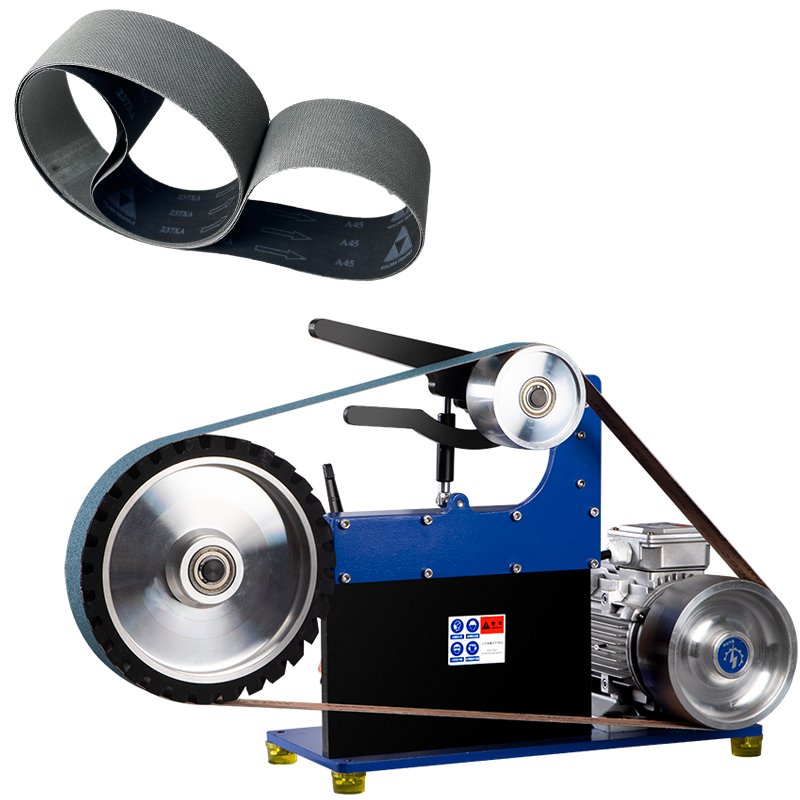
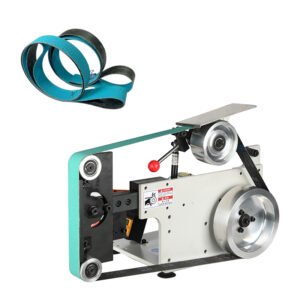
Industrial Vertical Belt Sanders (also known as stationary belt grinders or sanding stations) are the workhorses of metal fabrication, knife making, and woodworking shops. Their versatility is unmatched, but their performance is entirely dependent on one critical component: the sanding belt.
Selecting the wrong belt leads to inefficiency, high consumable costs, and poor finish quality. This guide provides a structured, professional framework for choosing the optimal sanding belt for your vertical sander, based on material and desired outcome, backed by industry best practices and technical data.

An industrial multifunctional vertical belt sander is a key machine in many factories for metal grinding, surface finishing, and decorative polishing. But the performance of the sander depends on choosing the right sanding belt.
The wrong choice often leads to:
- ❌ Short belt life
- ❌ Overheating and burn marks
- ❌ Uneven surface quality
- ❌ Higher production cost
By matching the correct belt type, grit range, and abrasive material to each processing stage and industry, manufacturers can achieve up to 35% higher efficiency and reduce abrasive costs by nearly 20% (based on internal case studies from polishing workshops).
Understanding Your Machine and the 3-Stage Abrasive Process
A typical industrial vertical sander operates at speeds between 1,500 to 5,500 SFPM (Surface Feet Per Minute). The key to professional results is following a structured abrasive progression:
- Coarse Grit (Stock Removal): <80 Grit. Purpose: Rapidly shape the workpiece, remove welds, and eliminate deep scratches.
- Medium Grit (Refining): 100 – 220 Grit. Purpose: Smooth out scratches from the coarse belt and prepare the surface for finishing.
- Fine Grit (Finishing/Polishing): >240 Grit. Purpose: Achieve the final surface finish, whether a smooth satin or a reflective polish.
Skipping grits (e.g., jumping from 60 to 400 grit) will simply polish the deep scratches from the 60-grit belt into the surface, requiring more time and effort to remove them.
How to Select the Right Belt: A Material-Specific Guide
1. For Carbon Steel, Tool Steel, & Iron (Ferrous Metals)
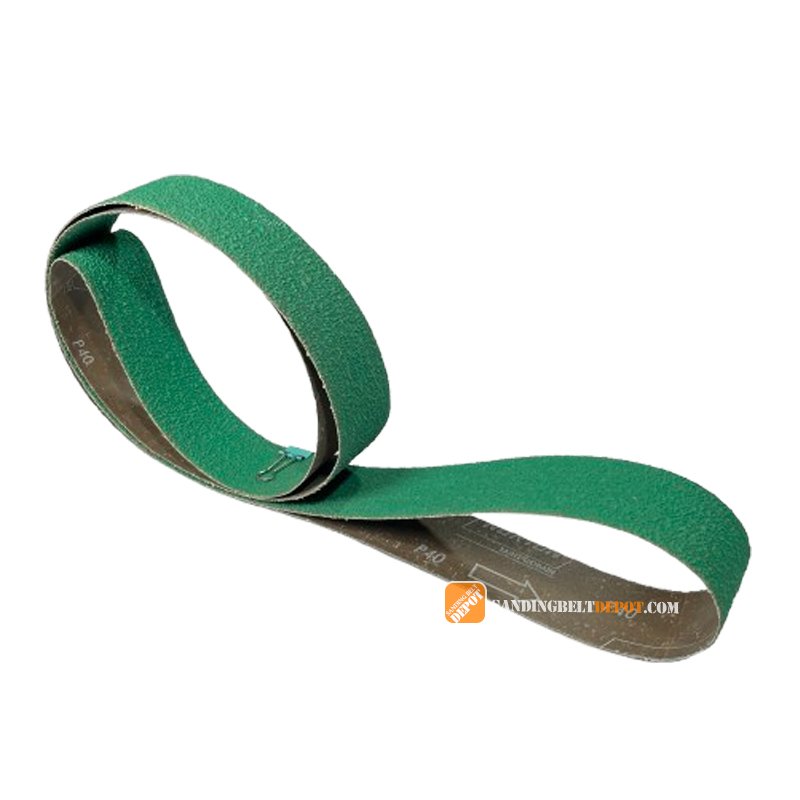
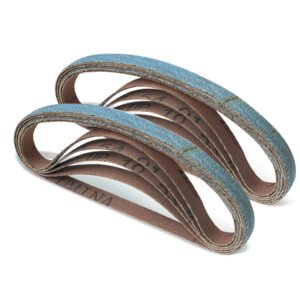
- Coarse Removal (e.g., 36 – 60 Grit): Zirconia Alumina (ZrO₂) Belts. The zirconia grain undergoes a self-sharpening process, making it exceptionally durable and long-lasting for heavy stock removal. A study by the Abrasive Engineering Society noted that zirconia alumina belts can offer up to 50% longer life than standard aluminum oxide on steel under high pressure.
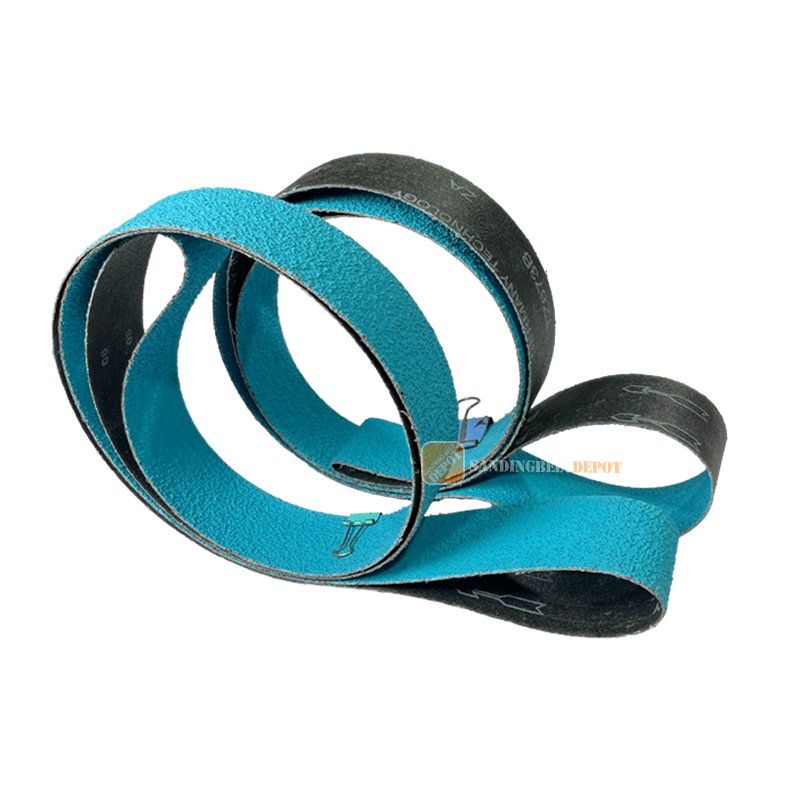
- Medium Refining (e.g., 80 – 180 Grit): Ceramic Alumina Belts. The ultra-sharp ceramic grains stay sharp even under high heat and pressure, providing fast cutting and consistent finish. They are the premium choice for difficult-to-grind alloys.
- Fine Finishing (e.g., 220 – 400 Grit): Aluminum Oxide (Al₂O₃) Belts. A cost-effective and versatile option for final smoothing and preparing for polishing.
Case Study: Knife Maker’s Progression
A knifemaker shaping a blank from annealed 1084 steel might use:
- Step 1 (Shape): Ceramic 36 Grit for fastest profiling.
- Step 2 (Refine): Zirconia 120 Grit to remove deep scratches.
- Step 3 (Finish): Aluminum Oxide 220 Grit before heat treat, and then 400+ grit for final hand-sanding post-heat treat.
2. For Stainless Steel, Aluminum, & Non-Ferrous Metals
These softer, gummier metals are prone to loading (clogging) the belt with material.
- Coarse/Mid-Range (e.g., 60 – 220 Grit): Open-Coat Aluminum Oxide Belts. The wider spacing between abrasive grains (up to 70% open area) prevents clogging, reduces heat buildup, and extends belt life. For aluminum, a non-ferrous specific belt with a special lubricating coating is highly recommended to prevent loading.
- Fine Finishing/Polishing (e.g., 240 – 1000+ Grit): Cloth Backed Polishing Belts (e.g., “P” Series). Used with a contact wheel and polishing compound, these flexible belts conform to contours to create a mirror finish on stainless steel or aluminum.
Pro Tip: Application Data Point: When finishing stainless steel welds, a progression of Zirconia 80 grit → Open-Coat AO 120 grit → Open-Coat AO 220 grit is a common industry standard to achieve a blendable, scratch-free finish without inducing heat-related discoloration (witness marks).
3. For Hardened Steel & Carbide
- Primary Solution: Diamond or CBN (Cubic Boron Nitride) Belts. These super-abrasive belts are essential for materials with a Rockwell Hardness above HRC 50. Diamond is for carbide, while CBN is for hardened ferrous metals.
- Usage: They are typically resin-bonded and require water cooling to prevent overheating the bond. A single diamond belt can outlast hundreds of conventional abrasive belts on carbide tooling, making it highly cost-effective for its niche.
4. For Wood, Composites, & General Purpose
- General Use: Aluminum Oxide Belts. The standard, economical workhorse for wood shaping and smoothing.
- Longer Life on Hardwoods: Zirconia Alumina Belts. Provide better durability and cutting speed on dense woods like maple or oak.
Pro Tips for Maximizing Performance & Belt Life
- Break-In Your Belts: For coarse grit ceramic or zirconia belts, run them for 10-15 seconds on a scrap piece of steel. This fractures the abrasive grains, creating micro-cutting edges for faster, cooler cutting.
- Use a Belt Dressing Stick: A dressing stick cleans loaded belts (especially from aluminum or softwoods) and exposes fresh, sharp abrasive grains, restoring cutting performance and extending life.
- Match Speed to Task: Use higher sander speeds (~5000 SFPM) for steel and lower speeds (~3000 SFPM) for plastics and non-ferrous metals to control heat.
- Let the Belt Do the Work: Applying excessive pressure bends the belt, creates heat, and glazes the surface. Use moderate, consistent pressure for the best results.
Systemize Your Abrasive Selection
The “best” sanding belt doesn’t exist in isolation. It is the one that is part of a systematic progression tailored to your specific material and finish requirements.
| Your Goal | Recommended Belt Type | Grit Range |
|---|---|---|
| Aggressive Steel Removal | AO / Zirconia or Ceramic | 36 – 60 |
| Stainless Weld Blending | Coated Sanding Belts | 80 – 220 |
| Aluminum Finishing | Non-Ferrous Open-Coat AO | 120 – 320 |
| Hardened Steel/Carbide | Diamond or CBN | 100 – 400 |
| Final Mirror Polish |
trizact/ Cloth Polishing Belt + Compound
|
400 – 1000+ |
(Updated on October 2, 2022, with support from AI)
Still unsure which belt is right for your application? Our technical specialists are here to help.
➡️ Contact Us for a Free Consultation OR Email(sandingbeltsolution@gmail.com)
➡️ Request a Sample Pack to Test
Valoraciones
No hay valoraciones aún.